
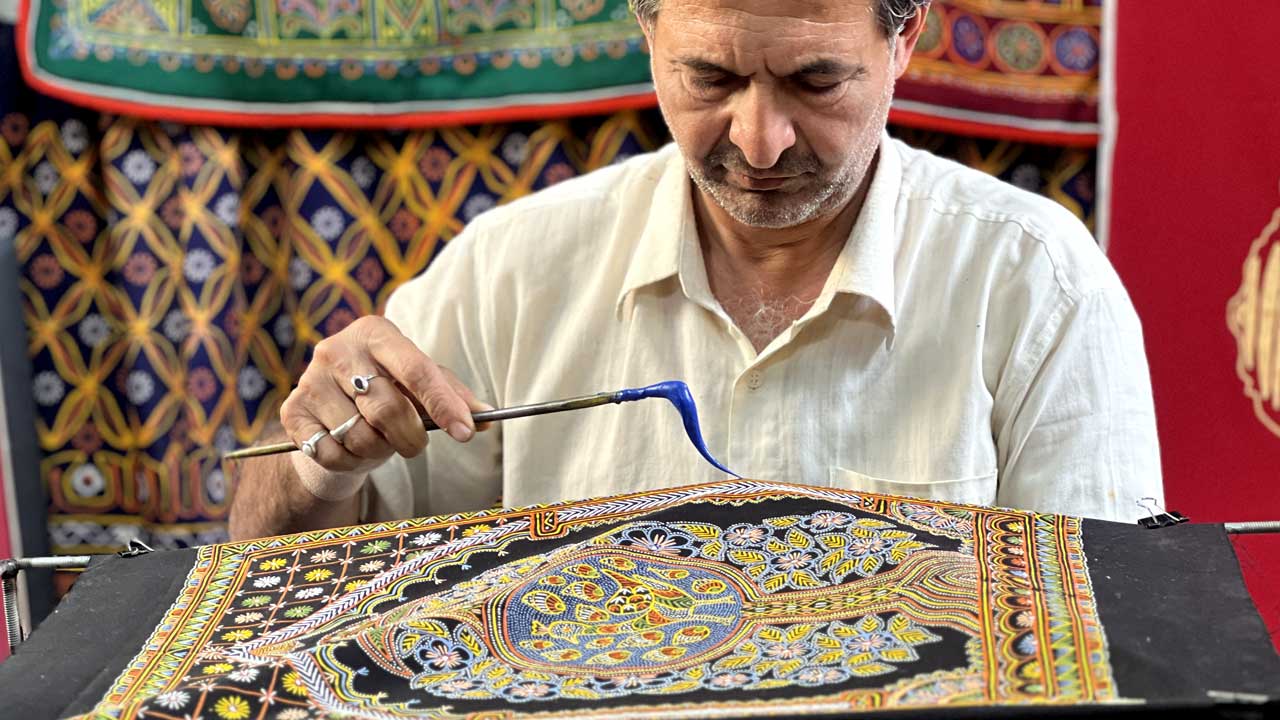
Dr. Ashish Shantilal Kansara: Preserving the 1,550-Year-Old Tradition of Kutch Rogan Art
From Madhapar, Bhuj, to national recognition, Dr. Ashish Shantilal Kansara has dedicated his life to preserving Rogan Art, a rare traditional painting technique, while creating new opportunities for women artisans and younger generations.
Introduction
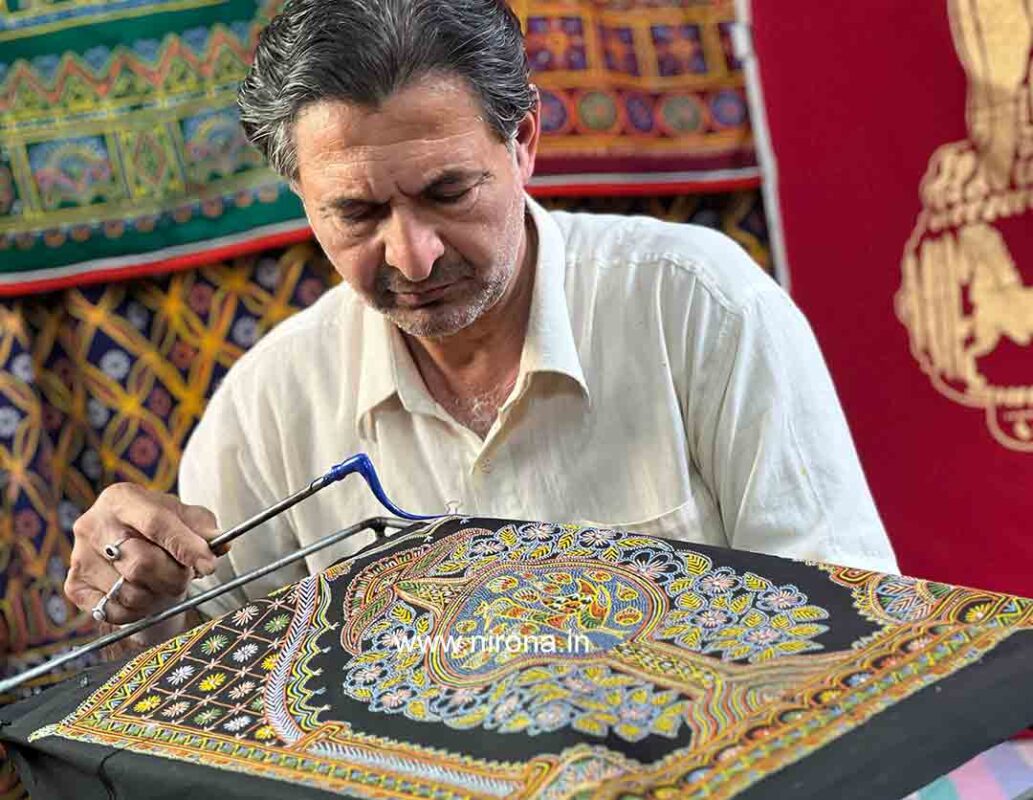
Madhapar, a village near Bhuj in the Kutch district of Gujarat, is known for its rich cultural heritage. It is also home to Dr. Ashish Shantilal Kansara, a master artisan who has devoted his life to preserving and promoting the traditional art of Rogan painting.
Rogan Art is a rare textile painting technique in which a thick, coloured paste made from drying oils is used to create fine designs on fabric. The craft requires patience, concentration, and years of practice. Although this art faced a serious decline due to machine-printed textiles and changing market demand, Ashish Kansara helped bring it renewed attention by introducing new designs, including paintings of Hindu deities, and teaching the technique to new learners.
His contribution to the craft was recognised on 7 July 2026, when he received an honorary Doctor of Literature (D.Litt.) degree at the 24th convocation ceremony of Dr. A.P.J. Abdul Kalam Technical University (AKTU), Lucknow. The degree was presented by Uttar Pradesh Governor Anandiben Patel in recognition of his contribution to preserving and promoting traditional Kutch Rogan Art.
A Family Tradition Passed Down Through Generations
Ashish Shantilal Kansara was born in 1975 in Ahmedabad and moved to Kutch in 1988. He learned Rogan Art from his grandfather, Jamnadas Vastaram Kansara, who introduced him to this traditional craft.
His father, Shantilal Jamnadas Kansara, did not practise Rogan painting. He worked as a rickshaw driver to support the family. Ashish therefore inherited the artistic tradition directly from his grandfather rather than through his father.
After completing his education up to the tenth standard, Ashish began working in Rogan Art. Learning the craft required considerable patience and practical experience. He developed his skills through the traditional methods passed down within his family.
For Ashish, Rogan painting became more than a profession. It became a responsibility to protect a cultural tradition that was at risk of disappearing.
When Rogan Art Faced Decline
For generations, Rogan painting was practised by artisans who created intricate designs on fabric using a special oil-based paste. However, the growing availability of machine-printed textiles made cheaper designs widely accessible.
By the early 1990s, demand for traditional Rogan work had declined significantly. Many artisans who had practised the craft began moving to other occupations to earn a living. The number of practising artisans fell, and the future of this specialised art became uncertain.
Ashish Kansara also faced financial difficulties. Following the devastating earthquake that struck Kutch in 2001, he had to step away from Rogan Art and undertake other work for approximately two to three years.
The situation was challenging for both the artisan community and the craft itself. Preserving Rogan Art required not only artistic knowledge but also renewed public interest and sustainable opportunities for the people who practised it.
The Rann Utsav and a New Beginning for Kutch Artisans
The revival of tourism and cultural activities in Kutch created new opportunities for traditional artisans. The Gujarat government’s Rann Utsav, launched during Narendra Modi’s tenure as Chief Minister, helped bring greater attention to the region’s crafts, culture, music, and traditions.
Visitors travelling to Kutch began showing renewed interest in traditional handicrafts, including Rogan painting. The festival provided artisans with opportunities to display their work directly to visitors and connect with new customers.
For Ashish Kansara, this renewed interest offered a chance to return to his family’s traditional craft. Rogan Art gradually began attracting attention again, helping the artisan community find new opportunities.
However, Ashish understood that restoring the craft’s popularity would require more than continuing the existing designs. He began exploring new subjects and expanding the artistic possibilities of Rogan painting.
Introducing Hindu Deity Paintings to Rogan Art
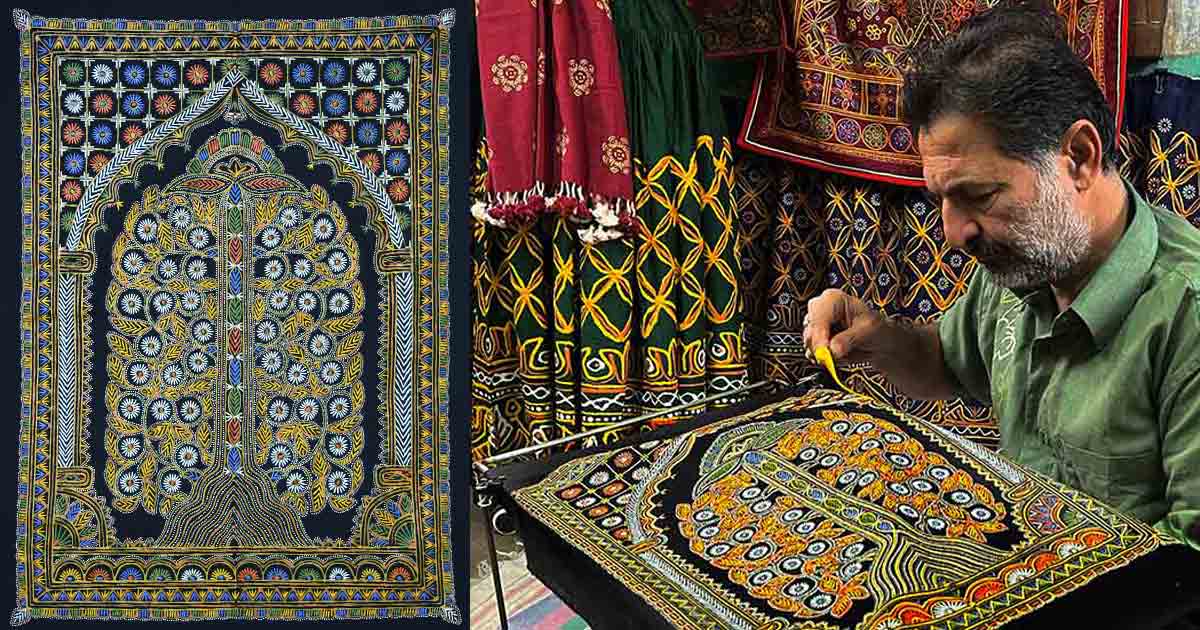
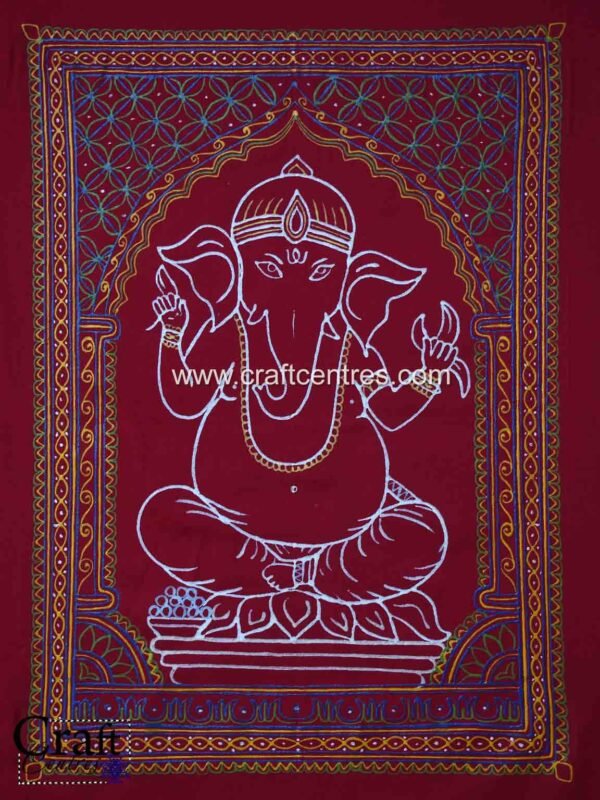
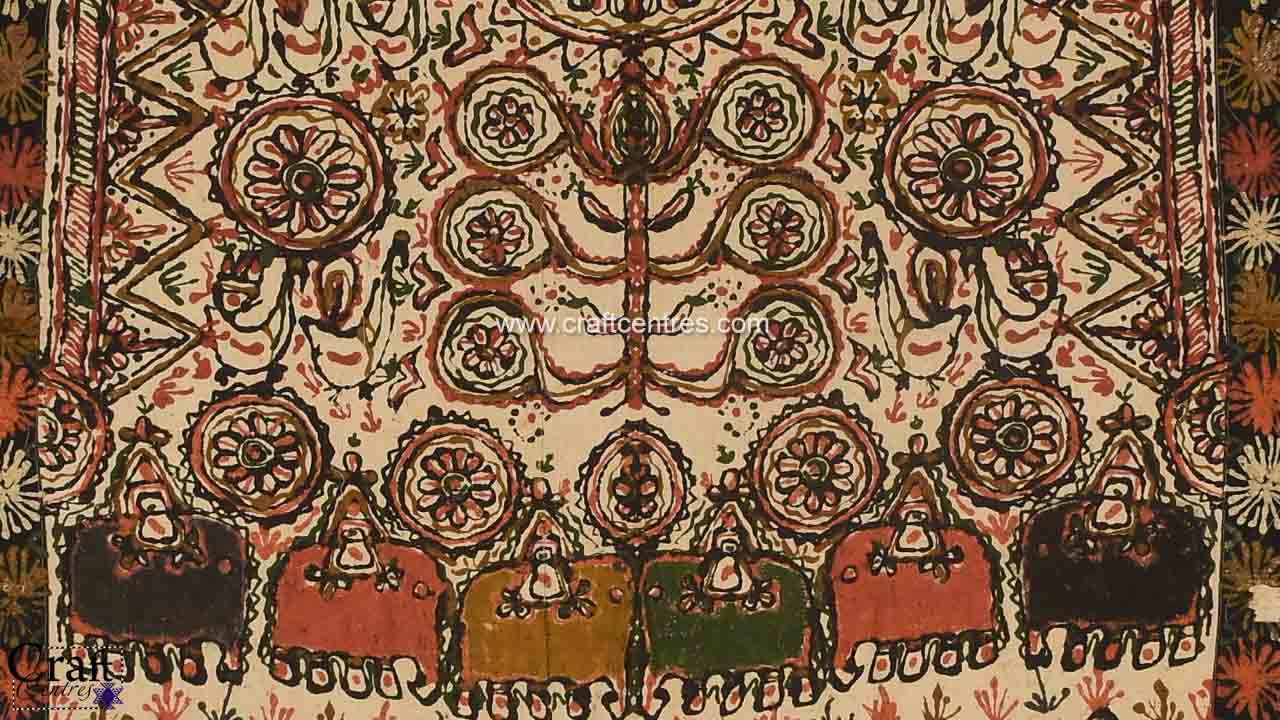
Traditionally, Rogan Art was known for its distinctive floral patterns, geometric arrangements, and the Tree of Life design. Ashish Kansara began creating new compositions, particularly paintings depicting Hindu deities.
His works included Shri Raja Ram Darbar, Lord Ganesha, Lord Hanuman, Shri Tirupati Balaji, and Bhagwan Swaminarayan.
These subjects brought a new dimension to his Rogan paintings. The detailed work required to depict religious figures using fine strands of coloured paste demanded considerable skill and precision.
Among his creations, the painting of Shri Raja Ram Darbar brought him considerable recognition. His work attracted the attention of visitors who travelled to Kutch during Rann Utsav to see the traditional painting technique.
By introducing religious themes alongside established Rogan designs, Ashish helped the craft reach audiences who connected with these subjects through their cultural and devotional significance.
His approach demonstrated how a traditional art form could retain its identity while exploring new creative directions.
What Is Rogan Art?
Rogan Art is a traditional textile painting technique associated with Kutch, Gujarat. The term is used in the local language for this distinctive form of painting, which involves applying a thick, coloured paste made from drying oils to fabric.
Unlike ordinary painting with a brush, traditional Rogan work is created by manipulating the paste into extremely fine strands. These strands are used to draw intricate patterns directly onto the cloth.
The technique requires careful control of the paste, steady hands, and considerable experience. A small mistake can affect the balance of a detailed design.
Rogan painting is traditionally associated with cotton fabric, including locally woven textiles. Its designs can range from symmetrical floral patterns to elaborate compositions and figurative paintings.
The craft is particularly valued because its distinctive appearance depends on a specialised process that cannot easily be replaced by ordinary printing methods.
The History of Rogan Painting
Rogan Art is an old painting tradition, and its historical development is an important subject of cultural interest.
In India, Rogan painting has been practised in different regions over time. In Gujarat, the craft became associated with places including Bhuj, Kutch, and other centres where artisans worked with traditional textile decoration. Historical accounts also refer to Rogan-related practices in parts of Uttar Pradesh, Rajasthan, and Tamil Nadu.
The word “Rogan” is used in the local language and is familiar in everyday expressions relating to painting and applying colour. The craft is also known by the traditional name Rogan Chhap.
Research into historic oil-based paintings has drawn attention to examples discovered in the Bamiyan region of Afghanistan. In 2008, Japanese researchers and UNESCO-associated work brought further attention to paintings in the Bamiyan caves, including works connected with the early history of oil-based painting techniques.
Some of these paintings have been dated to the fifth or sixth century. Their discovery contributed to wider discussion about the early use of drying oils in painting.
Although the precise historical relationship between the Bamiyan paintings and the Rogan technique practised in Kutch requires careful scholarly evidence, both are relevant to discussions about the long history of oil-based painting traditions in Asia.
The history of Rogan Art reflects the importance of preserving traditional knowledge and documenting the techniques used by generations of artisans.
How Rogan Art Is Made
The preparation of Rogan paste is one of the most specialised parts of the craft. Traditional artisans use drying oils, natural or prepared pigments, and other materials to achieve the required consistency and colour.
1. Preparing the Oil Paste
Castor oil is traditionally used in the preparation of Rogan paste. Other drying oils, including linseed, walnut, or poppyseed oil, may also be used in oil-based painting traditions and in particular formulations.
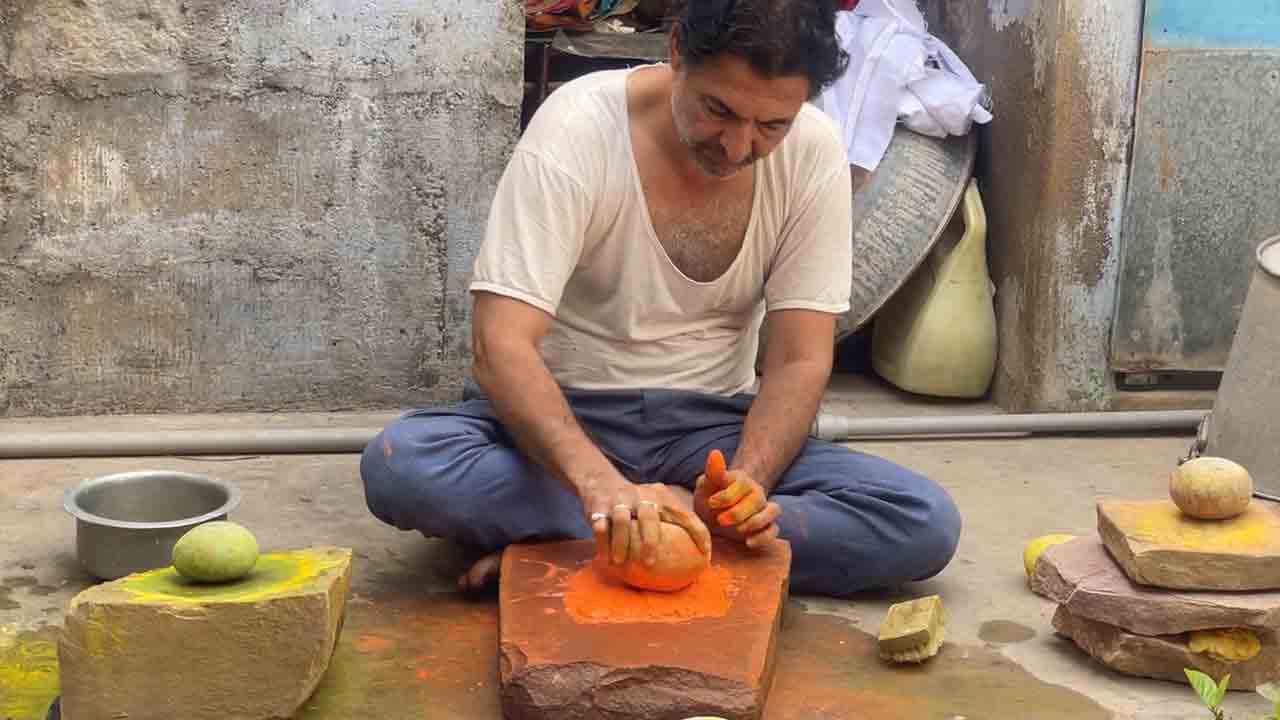
The oil is heated and thickened through a controlled process. Chalk powder and colour pigments are then added to produce a dense paste suitable for drawing fine lines.
The mixture is ground repeatedly with a stone until it reaches the required consistency. This process can take around 10 to 15 minutes or longer, depending on the materials and the preparation method.
The prepared paste is kept in water when necessary to prevent it from drying out before use.
2. Preparing the Paste for Painting
To begin painting, the artisan takes a small amount of paste using a metal rod and works it against the palm of the hand.
The paste is carefully stretched and drawn into a fine, thread-like strand. The artisan then guides this strand across the fabric to form the required pattern.
This method is one of the defining features of traditional Rogan Art. It allows the artist to create delicate lines, curves, leaves, petals, and other intricate details without relying on a conventional paintbrush.
3. Creating the Design
In the traditional freehand method, the artisan applies the design to one side of the fabric. The cloth is then folded so that the painted portion touches the opposite side.
When the fabric is pressed together and opened, the design transfers to the other half, creating a balanced, mirror-like composition.
This technique requires the artisan to plan the design carefully, as the placement and pressure determine the final pattern.
4. Drying and Finishing
After the design has been created, the fabric is left to dry. Once the paint has set sufficiently, the artisan may add fine dots, small lines, and other decorative details.
These finishing touches give the design its depth and visual character.
The complete process combines material knowledge, hand control, visual planning, and experience developed through repeated practice.
The Three Traditional Methods of Rogan Art
Rogan Art can be practised through three principal methods, each producing a distinctive result.
1. Rogan Chhap — Freehand Rogan Art
In this traditional method, the artisan draws a design on one side of the fabric using fine strands of Rogan paste. The fabric is folded to transfer the pattern to the other side, producing a symmetrical design.
2. Nirmika Rogan Chhap — Mould-Based Rogan Printing
This method uses a carved brass mould, known as a biba in the craft context. Rogan paste is placed into the design and pressed onto the fabric using a wooden handle or tool. The method allows a prepared pattern to be reproduced on the cloth.
3. Varnika Rogan Chhap — Decorative Rogan Work
In this method, the design is created without folding the fabric to make a mirrored impression. White Rogan paste is used for the pattern, which may then be decorated with mica, glitter, or metallic materials such as gold- or silver-coloured powder.
These methods show how artisans have developed different ways of applying Rogan paste while maintaining the craft’s distinctive character.
The Traditional Colours of Rogan Art
Traditional Rogan Art is associated with five principal colours:
- Saffron or orange
- White
- Yellow
- Green
- Blue
These colours have been used across generations of Rogan artisans. The finished artwork depends not only on the pigments but also on the thickness of the paste, the precision of the lines, and the arrangement of the design.
The limited traditional palette gives Rogan paintings a recognisable visual identity.
Continuing the Craft After COVID-19
The COVID-19 pandemic created another difficult period for traditional artisans. Travel restrictions, reduced tourism, and interruptions to markets affected opportunities to display and sell handmade crafts.
After the pandemic, Ashish Kansara renewed his efforts to keep Rogan Art alive by teaching the technique to students and encouraging younger people to learn about the craft.
He began conducting workshops for college students and schoolchildren. He also started visiting universities to introduce participants to Rogan painting and explain its traditional methods.
Teaching is important because Rogan Art requires specialised knowledge that is difficult to acquire from books alone. Students must understand the preparation of the paste, how to stretch it into fine strands, and how to control the design on fabric.
By sharing his knowledge, Ashish is helping create opportunities for the next generation to understand and practise this traditional art form.
Creating Employment for Women Artisans
One of the important aspects of Ashish Kansara’s work is his effort to create livelihood opportunities through Rogan Art.
Today, approximately 23 to 25 women work with him in this craft. Their participation helps sustain traditional skills while providing opportunities for women to contribute to the family economy.
His wife, Komal Kansara, is also involved in Rogan painting. She practises the art and teaches it to others, supporting its continuation within the family and the wider artisan community.
This work demonstrates how preserving a traditional craft can have benefits beyond culture alone. It can help maintain specialised knowledge, develop practical skills, and create employment opportunities in local communities.
For villages such as Madhapar, traditional crafts can also contribute to cultural identity and provide an additional source of economic activity.
Government Recognition and GI Authorised User Status
Rogan Art is recognised as a traditional craft associated with Kutch. Geographical Indication (GI) protection helps identify products that originate from a particular region and possess qualities or a reputation connected with that geographical origin.
Ashish Kansara is a registered authorised user of the Kutch Rogan Craft GI. This status recognises his authorised participation in the protected craft under the relevant GI framework.
GI recognition is important for traditional artisans because it helps establish the regional identity of the craft and supports efforts to preserve its authenticity.
For Ashish, continuing this work involves both practising the traditional technique and helping ensure that knowledge of Rogan Art is passed on to future generations.
An Honorary Doctorate for His Contribution to Rogan Art
On 7 July 2026, Dr. Ashish Shantilal Kansara received an honorary Doctor of Literature (D.Litt.) degree at the 24th convocation ceremony of Dr. A.P.J. Abdul Kalam Technical University in Lucknow, Uttar Pradesh.
The degree was presented by Uttar Pradesh Governor Anandiben Patel.
The honour recognised his contribution to the preservation, promotion, and continuation of traditional Kutch Rogan Art, as well as his efforts to create livelihood opportunities for local women artisans.
The recognition marked an important milestone in his journey from a family-trained craftsperson in Madhapar to an artisan whose work has received wider public and institutional attention.
For traditional crafts, such recognition can help increase awareness of the skill and dedication required to preserve techniques that might otherwise be lost.
Madhapar: A Village with a Rich Cultural Identity
Madhapar, near Bhuj in Kutch, is widely known for its prosperity and its strong community connections. The village is often described in public accounts as one of Asia’s wealthiest villages.
Alongside its economic reputation, Madhapar is also associated with traditional crafts and cultural heritage.
Through Ashish Kansara’s work, Rogan Art has become an important part of the village’s contemporary cultural identity. His efforts connect the knowledge inherited from his grandfather with new audiences, students, and women artisans.
The story of Rogan Art in Madhapar demonstrates how individual commitment can help preserve a specialised traditional skill and bring renewed attention to a craft rooted in local history.
The Future of Rogan Art
The future of Rogan Art depends on the continuation of traditional knowledge, opportunities for artisans to earn a livelihood, and interest from younger generations.
Ashish Kansara’s work brings these needs together. He continues to practise the craft, develops new compositions, teaches students, and works alongside women artisans.
His use of new subjects, including Hindu deity paintings, shows that traditional crafts can evolve creatively without abandoning their distinctive techniques.
Workshops in educational institutions can also help students understand the time, skill, and cultural knowledge involved in handmade art. At the same time, sustainable markets and public awareness remain important for ensuring that artisans can continue their work.
Preserving Rogan Art is therefore not only about saving old designs. It is also about protecting the knowledge, livelihoods, and cultural connections that allow the craft to survive.
Conclusion
Dr. Ashish Shantilal Kansara’s journey reflects the challenges and possibilities involved in preserving a traditional Indian art form. Having learned Rogan painting from his grandfather, he continued the family tradition through periods of declining demand, economic difficulty, and disruption.
By introducing new designs, creating religious paintings, teaching students, and working with approximately 23 to 25 women artisans, he has helped bring renewed attention to Kutch Rogan Art.
His honorary D.Litt. degree in 2026 recognised his contribution to preserving and promoting this traditional craft.
From his home village of Madhapar, Ashish Kansara continues to demonstrate that traditional art can remain relevant when artisans protect its essential techniques, share their knowledge, and create opportunities for future generations.
Rogan Art is more than a painting technique. It is a living tradition carried forward through skill, patience, cultural knowledge, and the dedication of artisans committed to keeping it alive.