
The Rogan painting research paper by Asmita Soni
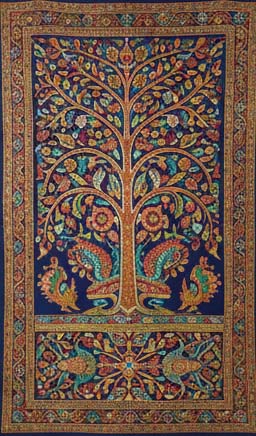
In the village of Madhapar, Kutch, a metallic rod dances above a piece of fabric, stretching a thick, vibrant paste into threads as fine as silk. This is Rogan painting, a craft that defies modern printing methods. While it is often viewed as a decorative tradition, recent research reveals it to be a sophisticated “secular science” with a history that spans continents and centuries.
The Bamiyan Connection: Re-writing History
For decades, the history of oil painting was believed to have originated in Europe. However, as noted in the research paper by Asmita Soni, a 2008 discovery by UNESCO and Japanese scientists turned this theory on its head.
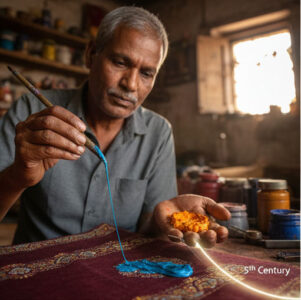
In the Bamiyan caves of Afghanistan, wall paintings of Lord Buddha dating back to the 5th and 6th centuries were found to be created using a “drying oil” technique. Soni writes, “With this research new light on world’s oil painting history that shifted from Europe to Asian countries. 1550 years old oil painting by Buddha’s disciples!! What a wonder!” This establishes a direct historical lineage to the Rogan art practiced in Gujarat today, which utilizes the exact same ancestral chemistry.
The Chemistry of “Drying Oil”
What separates Rogan from other textile arts is its unique medium. The process begins not with a palette, but with a furnace.
-
The Base: Artisans use castor oil—a major crop in Gujarat—making the art sustainable and locally sourced.
-
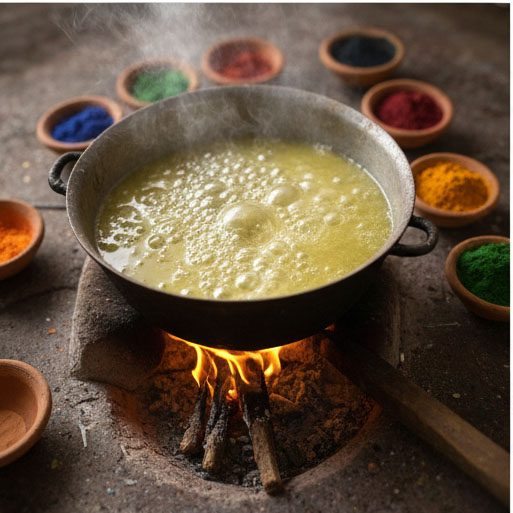
The Process: The oil is boiled for many hours at precise temperatures until it transforms into a thick, honey-like paste.
-
The Result: When mixed with natural pigments, it becomes resistant to air and water. Soni explains that this scientific mastery allows the art to be preserved “for an unlimited time” without fading or peeling.
The Science Behind Rogan Painting | Mastery Without a Brush
Rogan art is famously created without a brush or pencil. The artisan holds a small amount of the paste in their palm; the natural warmth of the body softens it just enough to be workable. Using a metallic stylus, the artist “pulls” the colour into a thread that never fully touches the fabric until it is laid down in intricate patterns.
The research identifies three distinct technical styles currently in use:
-
Rogan Chhap: A symmetrical “mirror” imprint created by folding the fabric.
-
Nirmika Chhap: Using brass moulds (biba) to press repetitive patterns.
-
Varnika Rogan Chhap: An opulent style enhanced with Jari (metallic thread) or Abrakh (mica) for a shimmering finish.
From Tradition to Social Empowerment
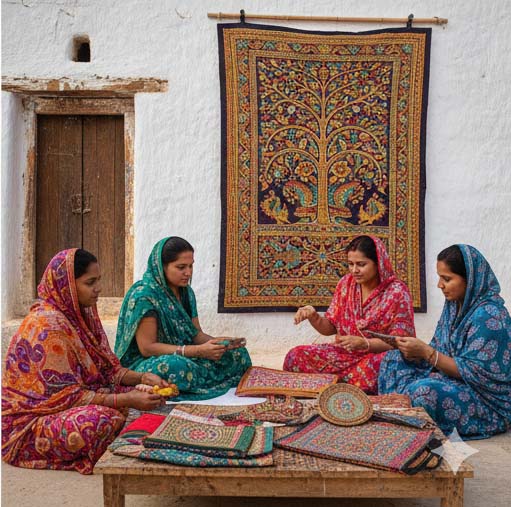
Beyond the technical, the art is undergoing a social renaissance. Historically a male-dominated secret, the craft is now being used to foster women’s empowerment.
The Kansara family of Madhapar, led by artisans like Ashish Kansara, has broken through “orthodox thinking” to train women in the craft. Today, artists like Komal Kansara are leading a new generation of women to become socially and economically independent through this ancient science. No longer just a family trade, Rogan art has become a tool for community welfare and cultural preservation.

Conclusion
Rogan painting is a testament to the scientific ingenuity of our ancestors. It bridges the gap between the 6th-century caves of the Silk Road and the modern-day markets of Kutch. As we recognize its Geographical Indication (GI) tag. Ashish Shantilal Kansara is a legally recognized Authorized User (AU/35946/GI/718/1) of the Geographical Indication (GI) Tag for Kutch Rogan Craft. Based in Madhapar, Kutch and its global significance, we celebrate a craft that is as much about chemistry and history as it is about beauty.
References
Primary Source:
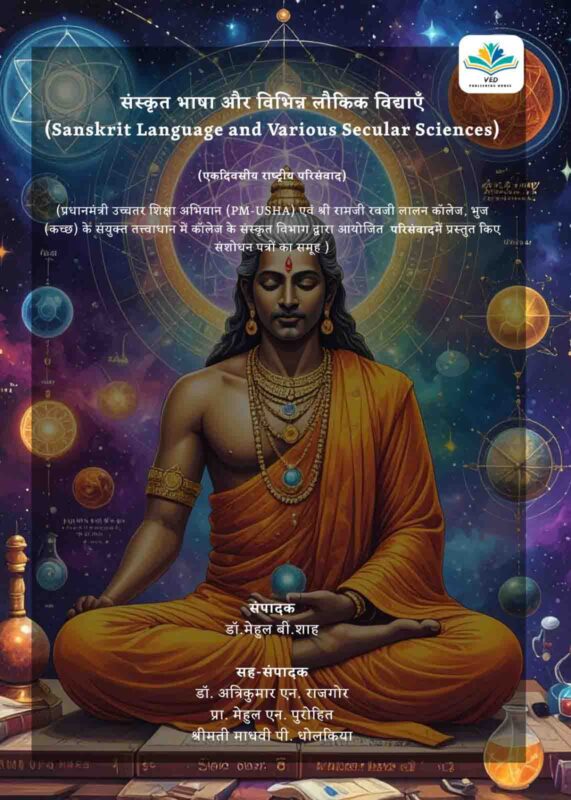
Soni, Asmita. “Explores the Connection to the Hidden History of Centuries with the Rogan Painting.” Sanskrit Language and Various Secular Sciences (संस्कृत भाषा और विभिन्न लौकिक विद्याएँ), edited by Dr. Mehul B. Shah et al., Ved Prakashan House, 2026, pp. 15-19. ISBN: 978-93-47801-50-1.
Seminar Context:
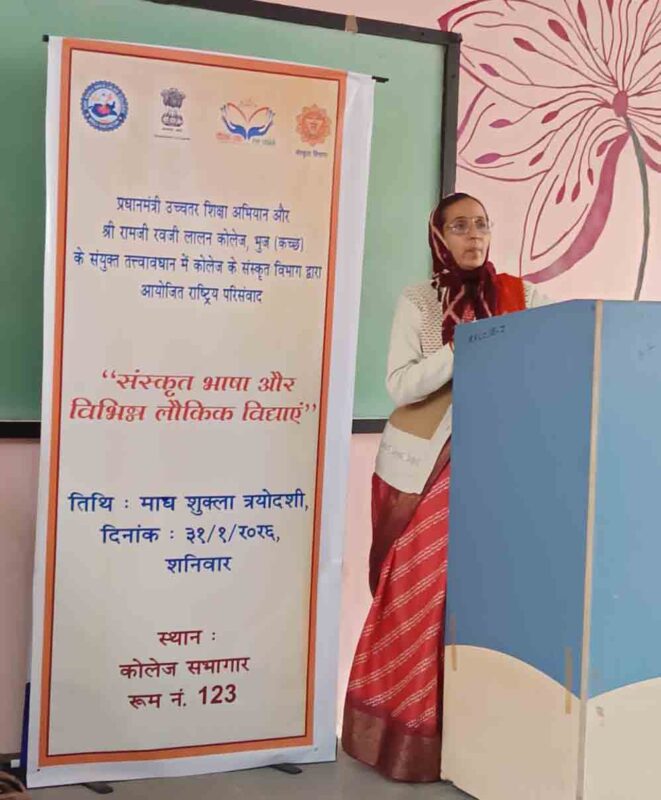
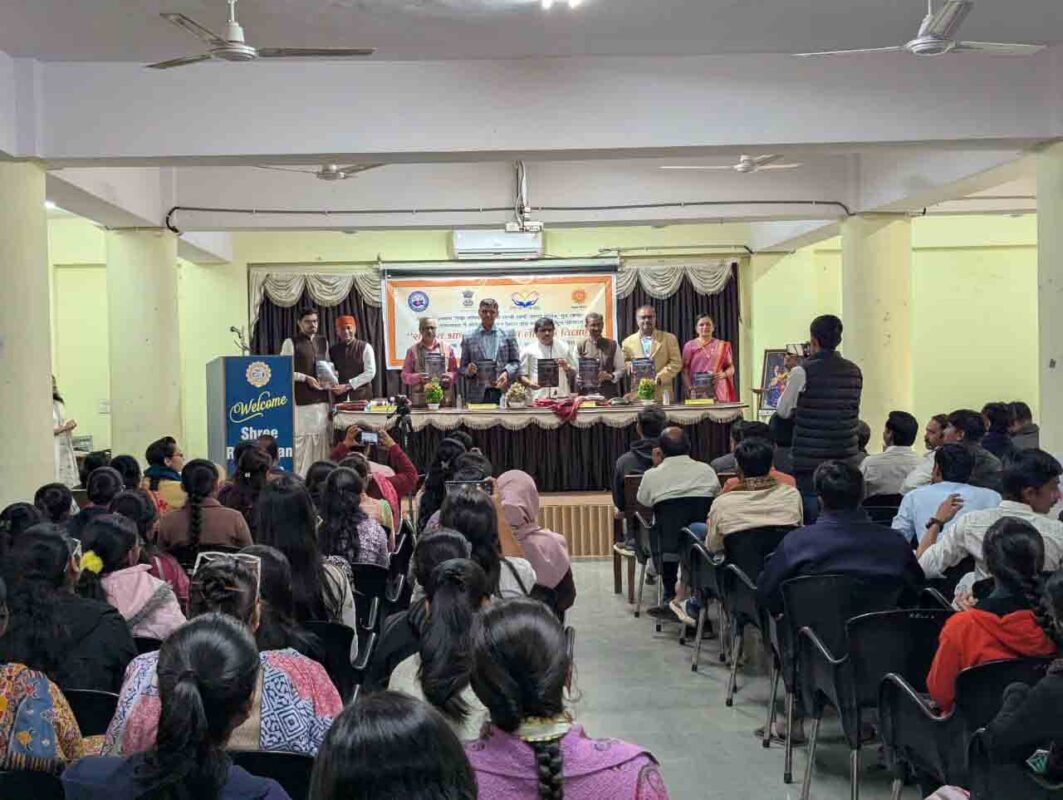
Presented at the National Seminar (PM-UShA), organized by the Sanskrit Department, Shri Ramji Ravji Lalan College, Bhuj (Kutch), Gujarat, January 2026.
Full Research Paper: Download PDF: Explores the Connection to the Hidden History of Centuries with the Rogan Painting
Book Reference: Sanskrit Language and Various Secular Sciences, edited by Dr. Mehul B. Shah. ISBN: 978-93-47801-50-1.