
History Of Rogan Painting
Rogan art is a very old oil painting technique of India. It is also called the drying-oil technique. This art is more than 1,550 years old. Some of the oldest drying-oil technique paintings in the world are Buddhist paintings. They were found in the Bamiyan region of Afghanistan. UNESCO and Japanese scientists discovered them in 2008. These paintings are from the 5th–6th centuries AD.
In India, this art is known as Rogan Chhap. It is also called Rogan art or Rogan painting. The Rogan art of Madhapar, Kutch, Gujarat, is the most famous and highly skilled form. The word “Rogan” comes from the Sanskrit word Rangan (रङ्गन्). It means “to add colour” or “to dye.”
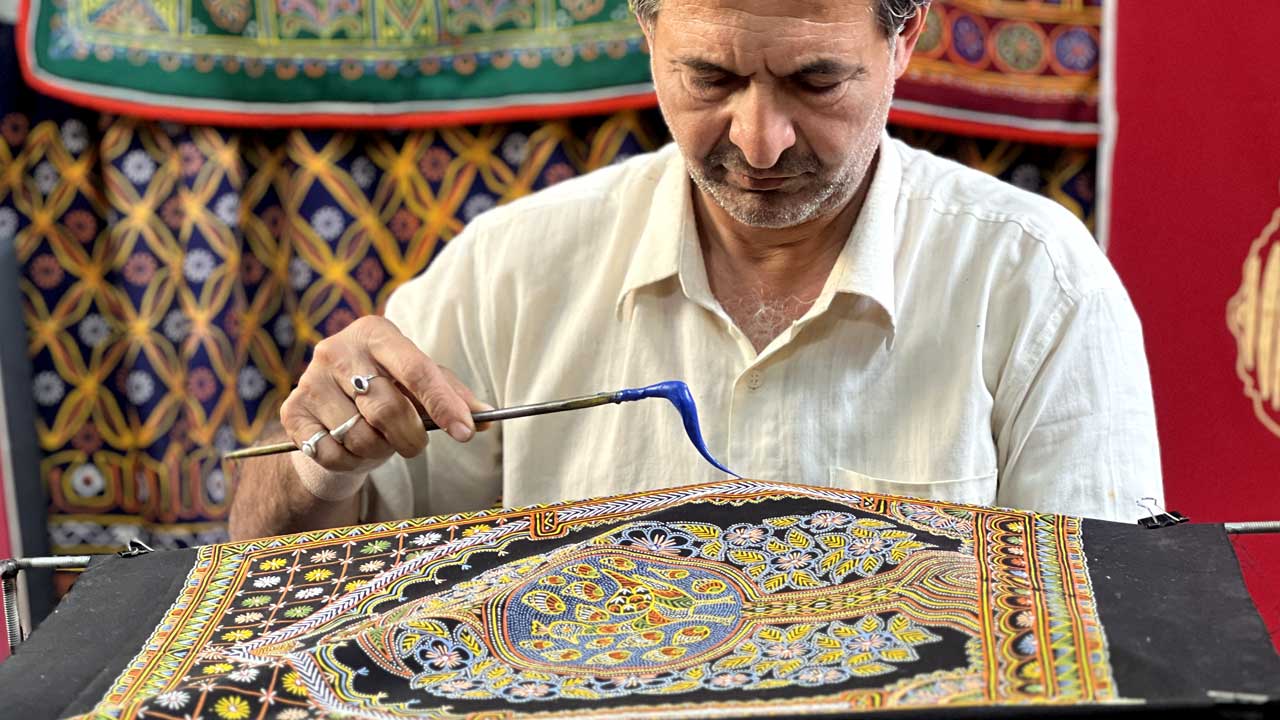
Technique of Making Rogan Paste for Rogan Painting
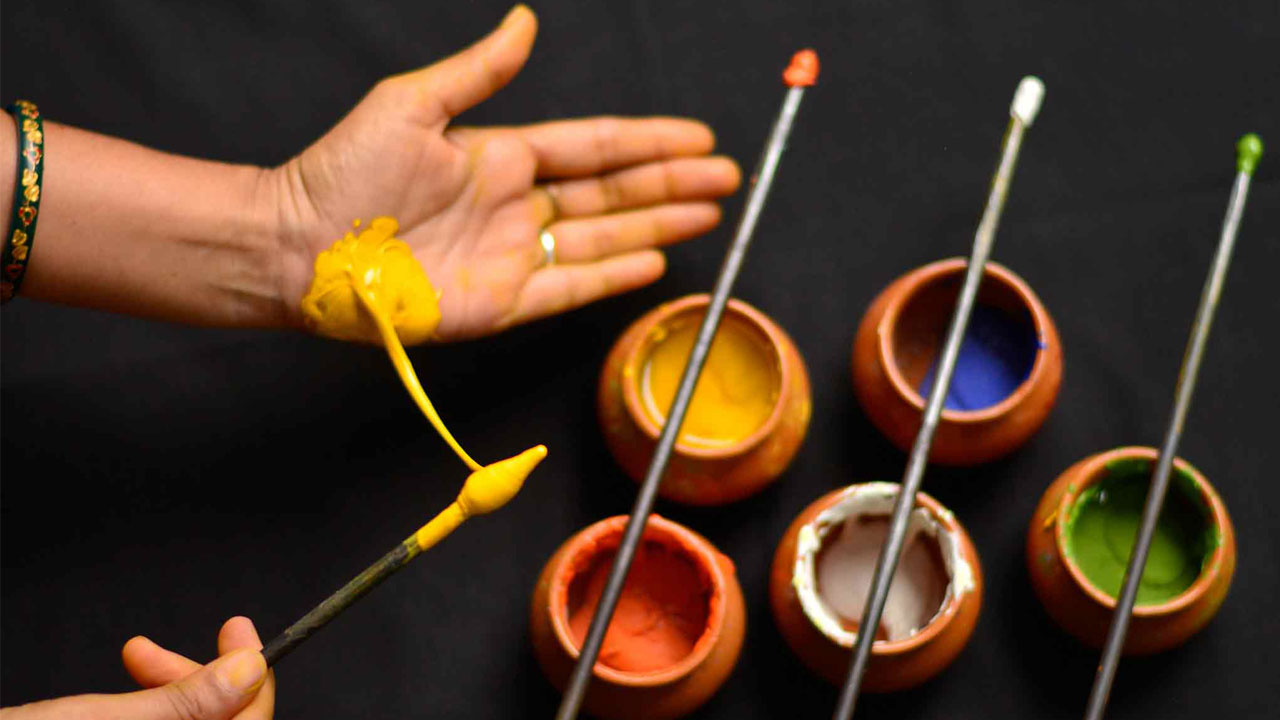
Rogan paste is mainly made from castor oil. Also used linseed oil, walnut oil, or poppyseed oil. The oil is heated for many hours. After heating, it becomes thick and sticky, like jelly. This thick oil is mixed with chalk and natural colours. This makes the Rogan paste. Artisans keep the paste in water so it stays soft and usable. Rogan painting is traditionally made with only five colours, orange, yellow, green, blue and white.
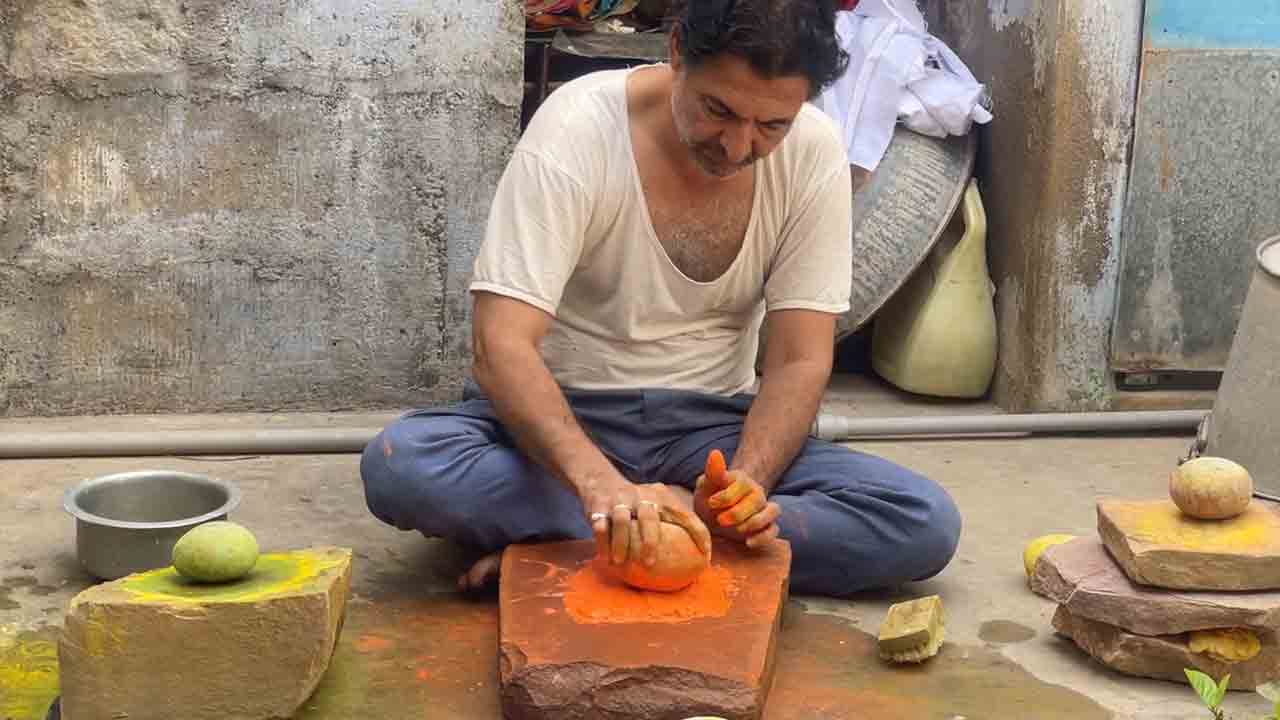
Painting Method of Rogan Painting
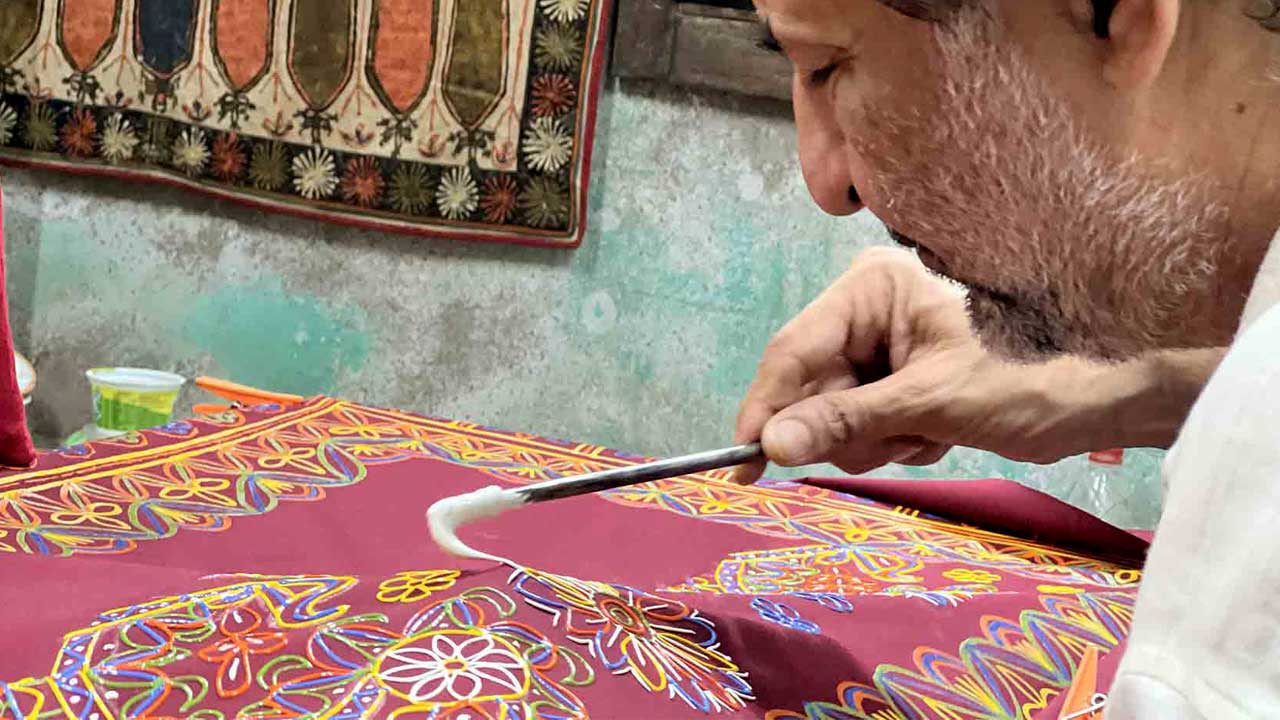
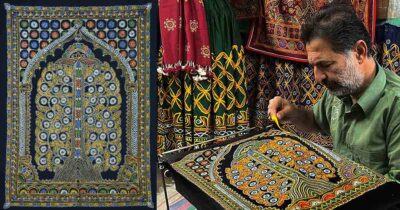
The artist takes a small amount of Rogan paste and puts it on the palm. A metal tool called a tulika is used to rub the paste. This warms and softens it. The artist draws by pulling a thin line of paint above the fabric. The tool usually does not touch the cloth. This work needs great skill and long practice. If a mistake happens, it cannot be fixed. Rogan art uses a special mirror method. The artist paints one side of the fabric. Then the fabric is fold and pressed gently. This copies the design to the other side. After opening the fabric, it is dried in the sun for at least 24 hours.
Types of Rogan Art
There are three main types of Rogan art:
• Freehand Rogan Chhap: Uses the mirror method
• Nirmika: Uses brass stamps (biba)
• Varnika: Uses decoration like mica, Zari and other shiny material
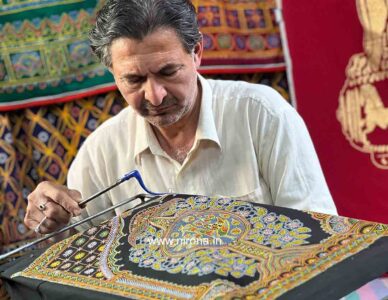
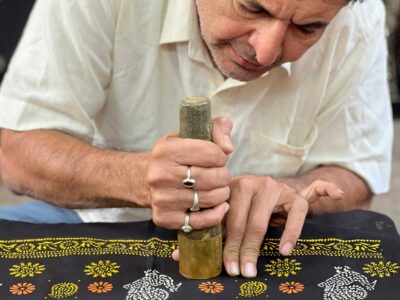
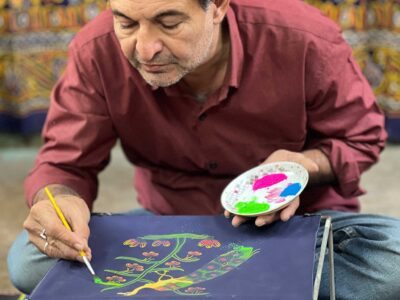
Buy Authentic Rogan Painting Product
Designs and Motifs
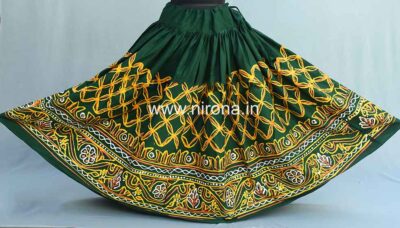
Rogan art shows Buddhist, Hindu, and Gujarat folk culture. Common designs are Rogan art lehengas, the “Popat Girnar” design, the Tree of Life, birds like peacocks and parrots, flowers, and village scenes. The Tree of Life is the most famous design. It is often used for wall art and special gifts because people everywhere understand its meaning.
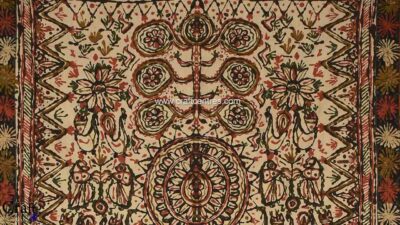
Living Tradition: Ashish Kansara Family
Kutch Rogan art has Geographical Indication status (GI/718). Madhapar village near Bhuj is the main centre of Rogan art today. The Ashish Kansara family of Madhapar protects this art. They run workshops, teach new artists, and manage the Rogan Art Kutch Trust. In the past, Rogan art was also practiced in other places. These include Bhabhar, Ahmedabad, and Mahesana in Gujarat, Patliputra in Bihar, Rajasthan, Tamil Nadu, and Uttar Pradesh.
See Video: how to do Rogan Painting